

Did you know that 71% of consumers are more likely to buy from a brand they recognize? Brand awareness doesn’t just get your name out there—it shapes loyalty, drives revenue, and gives you a competitive edge. In this comprehensive guide, we’ll reveal proven techniques, smart tools, and expert secrets to help you build brand awareness and transform casual consumers into devoted advocates.
If you’re looking to make your business unforgettable and win lasting customer relationships, read on—you’re about to learn how brand awareness can power your growth journey from invisible to irresistible.
Why Brand Awareness Is the Key to Loyalty: The Data Reveals Surprising Trends
-
Did you know that 71% of consumers are more likely to buy from a brand they recognize? Discover how brand awareness goes beyond visibility and drives revenue and customer loyalty.
Brand awareness isn’t just a marketing buzzword—it’s the business engine behind lasting customer relationships and sustainable growth. Research consistently reveals that when customers are truly aware of your brand , they not only remember you— they choose you . This goes far beyond simple recognition. High brand awareness translates directly into more trust, quicker purchase decisions, greater loyalty, and higher lifetime value. Consider just how much harder it is for an unknown business to win attention in a crowded market. Without awareness, even the best product or service gets overlooked.
Visual cues like logos or jingles become powerful triggers, making your brand or product the first choice in your audience’s mind. In fact, brand recognition and recall are now critical metrics that marketers watch as closely as sales. By increasing brand awareness , you strengthen every touchpoint across the customer journey, from social media to in-store experiences. The surprising trend? Companies with high brand awareness outperform competitors again and again, enjoying not just more revenue but fierce customer loyalty.

Understanding Brand Awareness: Definition, Impact, and Growth
What Do You Mean by Brand Awareness?
-
Brand awareness explained: visibility, recall, and impact. Why it matters for business growth.
Brand awareness is the degree to which consumers know, recognize, and recall your business, logo, or unique offerings. Think of it as the baseline for all your marketing efforts —if people don’t know your name, how can they become customers or advocates? Strong brand awareness results in higher recall, meaning customers effortlessly remember your brand or product when making decisions or talking with friends. It also boosts the perceived value of your offerings, since familiar brands are often trusted brands.
For emerging businesses, building brand awareness means moving from total obscurity to the point where your logo prompts instant recognition in a crowded market . High brand awareness accelerates word-of-mouth, amplifies every marketing campaign, and creates a gateway to lasting loyalty. Ultimately, your target audience can’t choose you if they don’t know you exist—so making your name familiar is essential to growth and success.
A key part of building brand awareness is understanding how your brand interacts and connects with audiences across various platforms. If you want to dive deeper into how socialization strategies can amplify your brand’s presence and foster genuine engagement, explore this comprehensive guide on effective socialization for brands and discover actionable tactics to strengthen your brand’s community connections.
Key Components of Strong Brand Awareness
-
Consistency, authenticity, differentiation, and omnichannel recognition.
Achieving strong brand awareness starts with consistency : every interaction, from your website to your packaging, needs a unified look and feel. Consistency reassures potential customers that your brand is reliable and trustworthy. Authenticity is equally important—brands with a clear, genuine voice develop deeper, more emotional connections with their audiences. By staying true to your values in every message, you establish credibility.
Differentiation ensures you don’t blend in. What’s your unique edge? Highlighting what sets you apart in your brand recognition strategy helps consumers remember and prefer you. Finally, omnichannel recognition extends your memorable presence across all potential touchpoints—from social media to customer service, your logo, tone, and customer experience must feel unmistakably “you” no matter where customers encounter your brand.
“People don’t buy what you do; they buy why you do it.” – Simon Sinek
The Four Stages of Brand Awareness
|
Stages |
Description |
|---|---|
|
Unawareness |
No knowledge of the brand |
|
Awareness |
First contact |
|
Consideration |
Evaluating options |
|
Preference |
Choosing your brand |
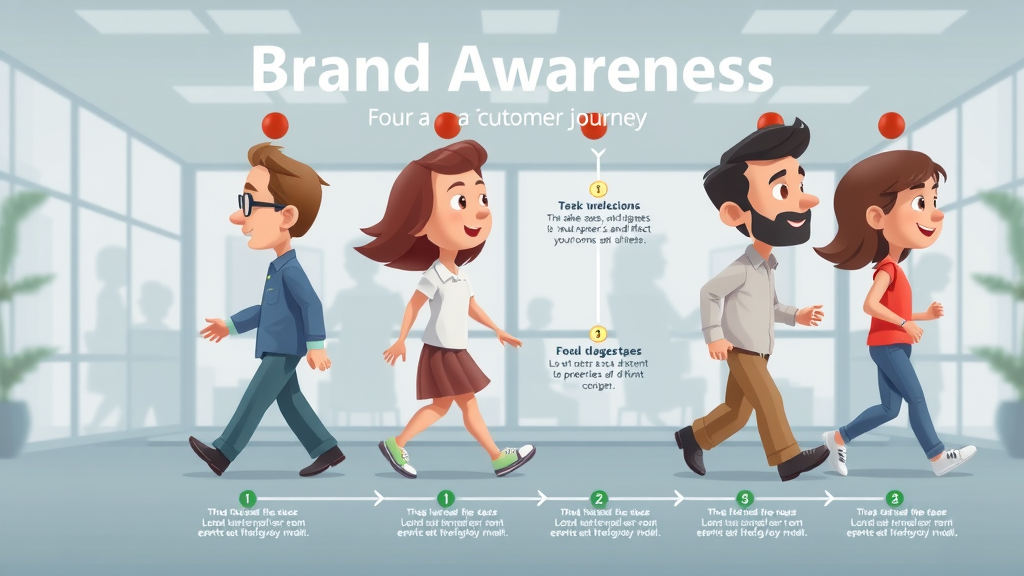
Every customer begins their brand awareness journey at ground zero— unawareness . As soon as your marketing efforts get you on their radar, they move into the awareness phase, where your logo, messaging, and values begin to make an impression. The next level, consideration , occurs when potential customers compare you with others, reviewing your content, reviews, and unique selling points. When all goes well, you reach the holy grail— preference , where your brand becomes the obvious, preferred choice. Understanding and nurturing each stage is key to cultivating loyal, returning customers.
Brand Recognition and Customer Loyalty: The Science Behind the Relationship
How Brand Awareness Fuels Customer Trust
-
Trust-building through reputation, credibility, and customer touchpoints.
Trust is the beating heart of customer loyalty, and brand awareness is often the first thread that weaves that trust. The more customers see your logo, hear your name, or experience your content, the more credible your brand or product becomes in their eyes. Every positive encounter with your business—on social media, through a blog post , or in a customer service chat—reinforces the idea that you’re reliable and safe.
Consistently high visibility across channels adds up to a formidable reputation. With each repeated touchpoint, your audience’s hesitation diminishes. In a marketplace overflowing with options, recognized brands get the benefit of the doubt. As a result, customers who trust your brand will not only choose your product or service , but will also advocate for you, turning trust into a powerful growth engine.
Strong Brand Awareness: A Competitive Advantage
-
Case studies illustrating how strong brand awareness leads to reduced churn and higher customer lifetime value.
Strong brand awareness gives you a decisive edge—customers stick around longer, purchase more often, and spend more than those new to your brand. Case studies abound: major retailers who cultivate high awareness through omnipresent campaigns consistently enjoy lower churn rates and impressive customer lifetime value. For example, top-performing brands invest in personalized engagement, social proof, and ongoing education efforts to stay top-of-mind with their audiences.
It’s not just about initial sales. Brand recognition multiplies the impact of every marketing investment over time, turning loyal customers into enthusiastic evangelists. Studies find that companies with strong, consistent branding have a much easier time launching new products because customers already trust their name. The payoff? Greater resilience to market shifts and growing customer bases that pay dividends year after year.

Build Brand Awareness: Proven Strategies for Modern Brands
Building Brand Awareness Through Social Media
-
How social media platforms and social networks elevate brand recognition and audience engagement.
Today’s brand awareness powerhouses know that social media is where attention lives. Platforms like Instagram, Facebook, TikTok, and LinkedIn offer businesses an unrivaled stage to showcase personality, values, and storytelling—all crucial for lasting recognition. Savvy brands use regular posts, interactive stories, and timely engagement to foster a lively community and build trust. But it’s not just about massive reach—micro-influencers, user-generated content, and even simple polls can spark conversations and embed your brand in your target audience’s memory.
Remember, effective brand awareness campaigns on social networks require more than posting content: they require active listening and meaningful dialogue. Responding promptly, amplifying customer voices, and participating in trending topics not only boost brand recognition but also humanize your business. And the more personal and authentic your social interactions, the more likely your followers are to become loyal customers and brand advocates.
Content Marketing Campaigns to Enhance Brand Recognition
-
Types of content that boost awareness: blogs, videos, podcasts, infographics.
A strategic content marketing campaign is a cornerstone for building brand awareness . High-quality, valuable content—whether it’s blog posts , educational videos, creative infographics, or engaging podcasts—positions you as a thought leader and enhances your brand’s credibility . The more useful and memorable your resources, the more likely your audience is to remember and trust your brand.
Diversifying content also helps you reach different segments of your target audience across various touchpoints. For instance, visually compelling infographics work well on Pinterest or LinkedIn, while how-to videos excel on YouTube and TikTok. The key is consistency: regular publishing keeps you top-of-mind and increases both brand recall and engagement. Over time, a rich content library not only feeds search engines but also cements your reputation as a reliable, go-to resource.

Tactics to Increase Brand Awareness and Build Brand Equity
Awareness Campaigns That Work: Examples and Ideas
-
Ambassador programs
-
Influencer partnerships
-
Viral marketing campaigns
-
Events and sponsorships
Effective brand awareness campaigns often leverage real people and real experiences to spark conversation. Ambassador programs turn loyal customers into powerful advocates, while influencer partnerships tap into new segments by leveraging the trust and reach of established social voices. Viral marketing campaigns—think creative challenges or memorable hashtags—can rapidly amplify reach, generating buzz and curiosity even among hard-to-reach audiences.
Events and sponsorships also offer unique value, letting your brand show up authentically in the spaces where your audience already gathers. These real-world moments, from hosting webinars to sponsoring local festivals, provide invaluable opportunities for direct interaction and lasting emotional connections. When all these tactics are cohesively orchestrated, they deliver exponential increase in brand awareness and lasting brand equity.

Optimizing Your Social Network Presence
-
Best practices for cross-platform visibility and active engagement.
To truly increase brand awareness across the digital landscape, brands need to optimize their social network presence with a unified and strategic approach. Start by identifying the platforms where your target audience is most active. Next, tailor your content to match the tone, style, and visual trends of each platform—while maintaining a consistent brand voice, look, and message.
Active engagement is key: respond quickly to comments, participate in industry discussions, and use features like live video or polls to create interactive experiences. Don’t overlook the power of cross-promotion; share content across platforms but adapt it for each audience. By regularly analyzing performance metrics, you’ll uncover what resonates most and ensure your efforts deliver measurable growth in brand recognition and loyalty.
Measure Brand Awareness: Powerful Methods for Modern Marketers
Quantitative and Qualitative Tools to Measure Brand Awareness
|
Method |
Metric |
|---|---|
|
Survey |
Brand recall % |
|
Web Analytics |
Direct traffic |
|
Social Listening |
Mentions and sentiment |
|
Share of Voice |
Market comparison |
Modern marketers rely on both quantitative and qualitative tools to measure brand awareness effectively. Surveys and polls can gauge spontaneous brand recall —asking participants to name brands in a certain category without prompting. Meanwhile, web analytics platforms (like Google Analytics) provide valuable metrics like direct traffic , which reflects how many visitors type your web address directly, indicating high recognition levels.
Social listening tools measure how often your brand is mentioned online and capture sentiment—whether people are talking about you positively, negatively, or neutrally. Finally, “ share of voice ” compares your conversation volume to competitors, giving you a clear benchmark for where your brand stands in the broader landscape. Regular use of these tools is essential for mapping the effectiveness of your campaigns and informing next steps.

Social Listening and Brand Awareness Metrics
-
Real-time insights from social listening platforms to track the success of your awareness campaigns.
Social listening platforms offer a treasure trove of real-time data on brand awareness . By tracking mentions, hashtags, and keywords specific to your brand, product, or service , you can gauge both the volume and sentiment of public conversations. High mention volume often means your marketing efforts or recent campaigns are making a splash.
Beyond numbers, social listening unlocks valuable qualitative insights—what emotions your brand inspires, which topics spark engagement, and how quickly negative sentiment gets resolved. These insights help you adjust messaging, identify emerging trends, and refine your overall strategy. Leveraging these brand awareness metrics means you’re not guessing—it’s like having a pulse on your market and the effectiveness of every awareness initiative.
Optimizing and Measuring Brand Awareness Campaigns
Common Pitfalls in Measuring Brand Awareness
-
Focusing solely on vanity metrics
-
Ignoring offline sentiment
-
Overlooking competitor benchmarking
Brands often make the mistake of relying exclusively on surface numbers—like follower counts or impressions—which are classic vanity metrics. While these can indicate visibility, they don’t always mean real awareness or engagement. Likewise, neglecting offline sentiment—what’s being said in communities, events, or physical locations—leaves out crucial dimensions of your brand perception .
Another common error is failing to benchmark against competitors. Just measuring your own growth can miss shifts in your market position. By synthesizing online and offline sentiment, blending quantitative with qualitative metrics, and always comparing against the competition, you ensure your awareness measurement is truly comprehensive and actionable.

Iterating for Success: Continuous Improvement in Building Brand Awareness
-
Agile marketing approaches, A/B testing, and campaign optimization for lasting brand growth.
Sustaining and growing brand awareness requires agility—don’t “set and forget” your marketing strategies. The most successful brands embrace a culture of continuous experimentation, using A/B testing to determine which messages, visuals, and channels drive the most recognition and trust. Agile marketing methodologies let you quickly pivot, double down on what’s working, and retire tactics that aren’t delivering.
Regular campaign analysis and incremental improvements help you stay ahead of audience shifts, competitive changes, and digital trends. By building feedback loops into every awareness initiative—and empowering your team to adapt based on data—you’ll sharpen your competitive edge and maximize loyalty for the long run.
People Also Ask: Your Top Questions about Brand Awareness Answered
What do you mean by brand awareness?
-
Brand awareness is the extent to which consumers recognize and remember your brand. It is the foundation for building trust and loyalty in a competitive market.
Brand awareness is how well your target audience can recall, recognize, and understand your brand. It’s not just about seeing your logo—it’s about connecting positive feelings and reputation with your company every time someone hears your name. High brand awareness means people remember you first and are more likely to choose your offering when making buying decisions.
What are the 4 stages of brand awareness?
-
The stages are Unawareness, Awareness, Consideration, and Preference. Each phase represents how deeply consumers engage with and remember your brand.
The four stages are: Unawareness (consumers don’t know you exist), Awareness (they learn about your brand), Consideration (they weigh your offering against others), and Preference (they choose your brand over competitors). Moving customers through each stage requires targeted messaging, value-driven experiences, and reliable measurement of progress.
What is an example of brand awareness?
-
When a customer instantly recalls your brand logo or product in a crowded market, such as recognizing the golden arches for McDonald’s, that’s brand awareness in action.
A classic example is someone in a busy city street instantly spotting the McDonald’s golden arches among dozens of signs and shops. Likewise, recognizing Apple’s logo on a device or Nike’s swoosh on athletic gear are hallmarks of exceptional brand awareness. These symbols are so embedded in public consciousness that they instantly conjure emotions, memories, and trust—proving the lasting impact of smart brand building.

What are the three types of brand awareness?
-
Brand recall, brand recognition, and top-of-mind awareness are the main types of brand awareness that indicate different levels of consumer familiarity.
Brand recall is when consumers can name your brand unaided, signaling deep familiarity. Brand recognition happens when customers spot your logo, slogan, or product and immediately connect it to your business. Top-of-mind awareness means your brand is the very first that comes to mind in your category. Together, these levels reveal how embedded you are in the minds of your audience.
Case Studies: Real-World Examples of Strong Brand Awareness
Lessons from Iconic Awareness Campaigns
-
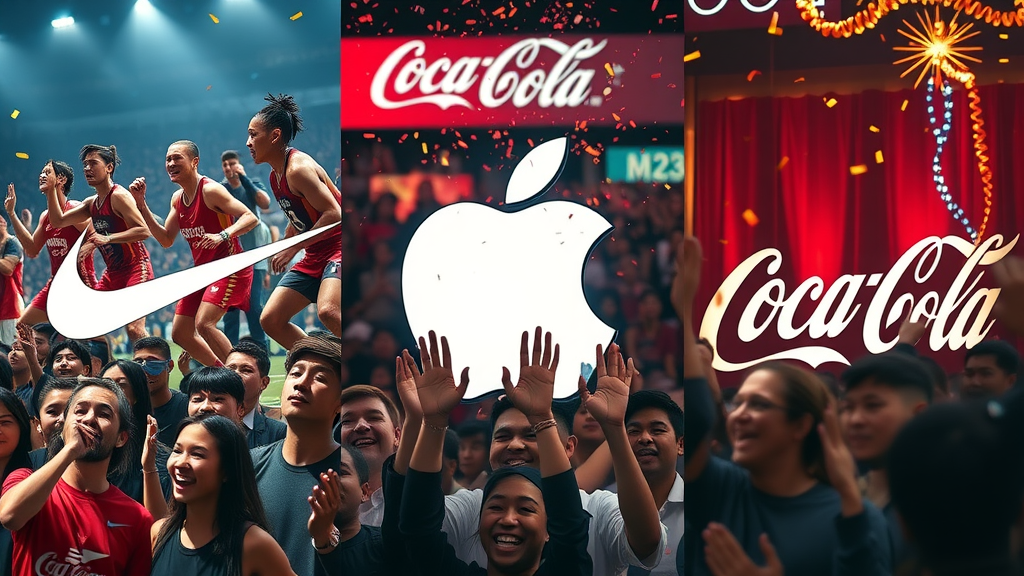
Nike’s ‘Just Do It’, Apple’s product launches, and Coca-Cola’s global recognition: what modern businesses can learn.
Legendary brand awareness campaigns offer clear lessons for modern businesses seeking a competitive edge. Nike’s “Just Do It” campaign didn’t highlight products—it celebrated a mindset, inspiring personal achievement and connecting with an entire generation. Apple’s meticulously staged product launches inspire cult-like anticipation by blending innovation, storytelling, and sleek design. Meanwhile, Coca-Cola’s seasonal marketing has made their red-and-white logo synonymous with joy worldwide.
What unites these campaigns is emotional resonance, memorable visuals, and unwavering consistency across every touchpoint. They show that successful building brand awareness is about creating stories and experiences that live beyond mere advertising, embedding your identity into the culture and daily life of your audience.
Expert Insights: Quotes on Building and Measuring Brand Awareness
“A strong brand is built not just on visibility, but on meaningful connections.” – Branding Expert
Quick-Start Checklist: Building Brand Awareness Today
-
Assess your current brand recognition
-
Choose 2-3 social media platforms
-
Launch an awareness campaign
-
Measure and iterate
-
Seek customer feedback
-
Invest in continuous learning
Frequently Asked Questions (FAQs) about Brand Awareness
-
Why is brand awareness important for small businesses?
-
How often should I measure brand awareness?
-
Can social media replace traditional awareness campaigns?
-
How do I know if my awareness campaign is working?
Why is brand awareness important for small businesses?
For small businesses, brand awareness levels the playing field. It helps you stand out against more established competitors by giving your brand a personality and memorable presence, both online and offline. With higher awareness, you attract more customers through referrals, positive reviews, and greater trust. Since small businesses often operate with limited budgets, investing in smart awareness strategies offers tremendous long-term value and opens doors for rapid growth and community engagement.
How often should I measure brand awareness?
Regular measurement is critical to ensure your awareness campaigns deliver results. Ideally, track key brand metrics at least quarterly, with deep surveys or brand recall studies once or twice a year. Social listening and web analytics can give you real-time snapshots, but supplementing them with periodic qualitative feedback gives you a fuller picture over time. Adjust your measurement frequency based on campaign intensity and audience shifts.
Can social media replace traditional awareness campaigns?
Social media is a powerful accelerant for brand awareness —but it shouldn’t replace all traditional efforts. Digital channels offer unmatched reach and engagement, but real-world experiences, events, and word-of-mouth also play crucial roles. A blended strategy, using both online and offline initiatives, delivers the most comprehensive and sustainable growth in awareness and loyalty.
How do I know if my awareness campaign is working?
You’ll know your awareness campaign works when you see increases in direct traffic, social mentions, branded search queries, and positive sentiment. New customers will reference campaigns or content in conversations, and brand recall rates will rise. For a holistic view, track both quantitative analytics and customer feedback to ensure your brand isn’t just being seen, but is truly remembered and preferred.
Key Points Every Business Needs to Remember about Brand Awareness
-
Brand awareness is foundational for growth
-
Measurement is key
-
Strategic campaigns build long-term loyalty
-
Adopt an iterative approach
Transform Your Brand Awareness: Take Action to Win Loyal Customers
-
Struggling to stand out? Let us help you build, measure, and amplify your brand awareness. Complimentary strategy session—email us at info@alphadogdigital.com to get started.

Essential Resources for Building Brand Awareness
-
Top brand monitoring tools
-
Recommended reading
-
Influential case studies and marketing podcasts
Watch and Learn: Video Tutorials on Measuring and Maximizing Brand Awareness
-
Video 1: Case Study Breakdown – How Nike Achieved Global Brand Recognition
-
Video 2: Beginner’s Guide to Social Listening for Brand Awareness
-
Video 3: Step-by-Step – Planning a Viral Awareness Campaign
-
Video 4: Panel Discussion – Experts Debate Best Ways to Build Brand Loyalty
-
Video 5: Workshop – Real-Time Brand Awareness Metrics in Action
A Roadmap to Building Brand Awareness: Next Steps for Your Business
-
Summarize your actionable takeaways and guide your brand’s journey to greater awareness and loyalty. Remember: success starts with a single step.
If you’re inspired to elevate your brand’s visibility and loyalty, remember that the journey doesn’t end with awareness alone. The most successful brands continually refine how they connect, engage, and socialize with their audiences—both online and offline. For a deeper look at the strategies that drive authentic brand engagement and community-building, take the next step by exploring the broader principles of brand socialization and digital interaction . Unlock new ways to foster meaningful relationships and set your business apart in today’s dynamic marketplace.
Ready to become unforgettable? Assess your current brand standing, launch your next awareness campaign, and commit to measuring and improving every step—your path to brand loyalty starts now.
To deepen your understanding of brand awareness and its impact on customer loyalty, consider exploring the following resources:
-
“What Is Brand Awareness? Definition, Importance & Strategies” ( agilityads.com )
This article provides a comprehensive overview of brand awareness, detailing its significance in marketing and offering strategic approaches to enhance it.
-
“How to Measure Brand Awareness” ( qualtrics.com )
This resource outlines various methods and tools for assessing brand awareness, including social listening, Google Trends, and brand tracking software, helping you gauge the effectiveness of your brand awareness initiatives.
If you’re serious about building and measuring brand awareness to win loyal customers, these resources will provide you with valuable insights and actionable strategies.
