

Did you know: Businesses that invest in SEO analytics and tracking reap over 50% higher returns on their digital marketing spend than those that don’t. If you want to avoid missing growth opportunities and start outpacing your competitors, understanding your SEO metrics is not just helpful—it’s essential. This comprehensive guide will show you how to turn data into dramatic improvements in performance and growth, even if you’re new to SEO. Let’s dive in and unlock your website’s potential.
Why SEO Analytics and Tracking Are the Foundation of Digital Success
- Learn why businesses leveraging SEO analytics and tracking see over 50% higher returns on digital marketing spend compared to those who do not.

“Without data, you’re just another person with an opinion.” – W. Edwards Deming
Interpreting Game-Changing Insights: Examples of SEO Analytics and Tracking in Action
- Real-world scenarios of companies utilizing SEO analytics and tracking to double organic traffic and improve conversion rate by 35% within a year.
Imagine launching a new product page and seeing organic traffic triple in just six months. Or, picture a local business leveraging SEO tracking to identify high-exit keywords—then optimizing content, which spurs a 35% increase in conversion rate. These are not isolated miracles; they are results rooted in continually monitoring seo metrics like keyword ranking, bounce rate, and traffic growth. By interpreting these insights, organizations can pivot strategies quickly to outperform the competition. Whether it’s adjusting content tactics, optimizing site speed, or targeting high-value keywords, real-time data empowers continuous improvement.
A SaaS company, for example, used Google Analytics and Google Search Console to spot drop-offs in their conversion funnel. By analyzing these patterns and acting on the insights, they revived their landing page, improved the user journey, and ultimately doubled their organic leads in less than a year. These examples underscore the power of integrating SEO analytics and tracking into digital marketing operations.
What You’ll Gain From This Guide on SEO Analytics and Tracking
- Understand the essentials of SEO analytics and tracking
- Learn how to set up and utilize analytics tools
- Uncover how to measure SEO performance and engagement
- Discover actionable strategies for accelerating growth
By reading further, you’ll unlock the keys to maximizing seo performance —from foundational best practices and must-track metrics, to advanced analytics tool integration and data-driven decision-making. Let’s set you up for measurable digital marketing success.
Whether you’re launching your first SEO campaign or scaling growth for an established site, this guide breaks down complex concepts into actionable steps. You’ll discover is how to translate metrics like organic traffic and keyword rankings into meaningful impact for your business.
Defining SEO Analytics and Tracking: What Every Marketer Needs to Know
What is SEO analytics?
- Detailed explanation of how SEO analytics reveal website performance, keyword ranking, and user engagement.
SEO analytics is the systematic collection, measurement, and analysis of data that shows how well your website is performing in search engine results . With SEO analytics, marketers uncover patterns in organic search traffic, identify top-performing content, and pinpoint which keyword rankings drive the most valuable clicks. This process goes beyond counting visitors—it’s about understanding how users engage, where they come from, and what keeps them coming back.
At its core, SEO analytics answers pressing questions: Are our optimization efforts paying off? Which keywords are gaining traction in search engines ? How does our conversion rate stack up week over week? By tracking metrics like bounce rate , average session duration, and SEO rank , you gain the clarity needed to refine strategies, justify investments, and prove results to stakeholders. This data-driven approach is crucial for staying agile in today’s fast-changing digital marketing landscape.
What is SEO tracking?
- Clarification of SEO tracking as continuous monitoring of website SEO metrics, keyword rankings, and progress toward goals.
SEO tracking is the regular, ongoing process of monitoring your website’s seo metrics and performance indicators. This includes keeping tabs on keyword rank changes, fluctuations in organic traffic , and progress toward specific ranking or conversion goals. Unlike a one-time audit, SEO tracking demands consistency—it’s about spotting trends, catching issues early, and adapting quickly to algorithm updates or shifts in user behavior.
Effective SEO tracking utilizes several analytics tools , from Google Analytics for deep traffic analysis to Google Search Console for granular search engine ranking insights. By automating reports and setting up dashboards, teams ensure they’re always informed about what’s helping or hindering their SEO performance. The ultimate goal of SEO tracking is continuous improvement, where even small tweaks can lead to substantially better outcomes over time.
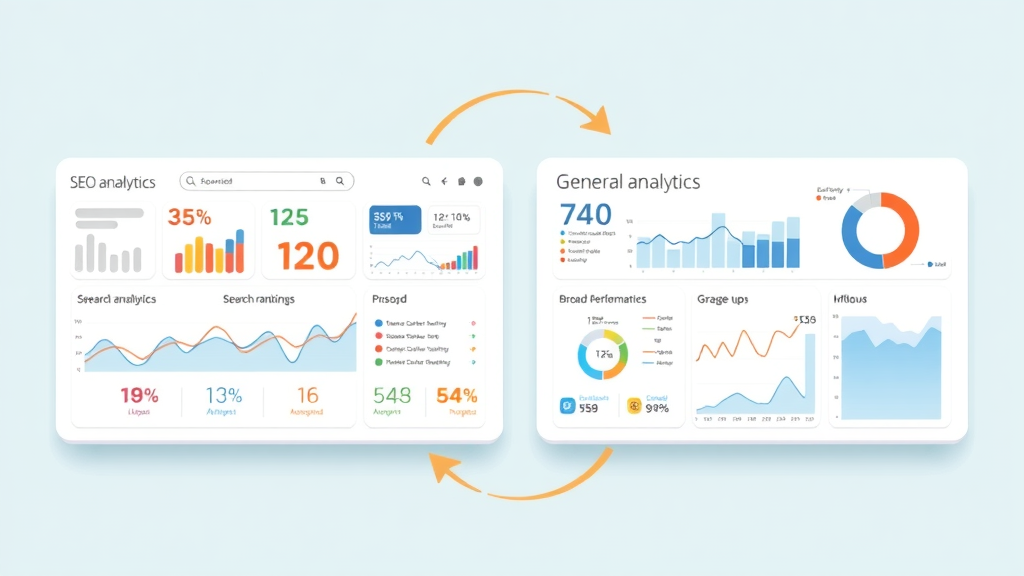
SEO analytics vs. analytics: What’s the difference?
- Comprehensive breakdown of how SEO analytics focus on search engine performance, while broader analytics cover all digital channels.
While “analytics” encompass data from all digital channels—such as social media, email marketing, and paid ads— SEO analytics zero in on performance within search engines . Where general analytics might track total website visits or social referrals, SEO analytics look specifically at progress within organic search : keyword rank changes, visibility in search results , and factors impacting seo performance .
The distinction is crucial. Focusing on SEO analytics means you’re measuring the effectiveness of your seo efforts : What keywords generate traffic? How is your website ranking evolving? Which content pieces are pulling their weight in search? In contrast, general analytics provide a broader snapshot—including data not directly tied to search engine optimization . Combining both gives you a high-definition view of overall and search-specific success.
SEO meaning and importance
- A concise definition of SEO and why it is critical for digital growth.
SEO , or Search Engine Optimization , is the science of increasing the quality and quantity of website traffic through organic search engine results . By optimizing your site for relevant keywords, enhancing page speed, and improving user experience, you attract more visitors without the cost of paid ads. In a world where over 90% of online experiences begin with a search engine , strong SEO is non-negotiable for digital growth.
Investing in SEO means committing to long-term visibility, brand trust, and high-converting traffic. Unlike fleeting social media campaigns or expensive PPC ads, the returns from proper SEO compound over time—making it a cornerstone of any effective digital marketing strategy.
The Core Metrics of SEO Analytics and Tracking Every Business Should Monitor
Organic traffic: The Heartbeat of SEO Performance
- How tracking organic traffic reveals the effectiveness of your SEO strategies.
Organic traffic is the lifeblood of any successful SEO campaign. This metric measures the number of visitors coming to your site directly from search engine results, without paid advertisements. By monitoring organic traffic in analytics tools such as Google Analytics , you can quickly assess whether your seo efforts are moving the needle. Increases point to improved rankings and visibility, while declines may indicate issues with recent changes or algorithm shifts.
Effective tracking means segmenting organic search traffic by source—like Google, Bing, or Yahoo—and diving into landing page performance. Doing this helps you pinpoint what content or keywords are truly resonating with your audience. Over time, you’ll develop a playbook for scaling what works and fixing what doesn’t, cementing your seo performance as a driver of business growth.

Bounce rate and user engagement: Signals of User Experience
- Why bounce rate and engagement metrics are leading indicators of SEO health.
If organic traffic is your pulse, then bounce rate and user engagement act as your electrocardiogram—revealing the health and appeal of your content. A high bounce rate may indicate that users are not finding what they expect, or that your site loads too slowly. Conversely, a lower bounce rate and higher engagement—measured by session duration, pages per visit, or scroll depth—signal that users are engaged and value your content.
Tracking these engagement metrics allows you to hone in on technical and content issues. For instance, heatmaps and event tracking within your analytics tools can show click patterns, helping to identify confusing CTAs or navigation dead-ends. Lowering bounce rate and boosting engagement should always be a continuous goal in your seo strategy , as search engines increasingly reward user-focused sites in their rankings.
Keyword ranking, keyword rankings, and keyword rank: Pinpointing Search Engine Visibility
- Tracking keyword ranking fluctuations for ongoing SEO improvement.
Monitoring keyword ranking is central to understanding your site’s prominence in search engine results . This metric reflects where your pages appear for target keywords—and tracking keyword rank across time highlights progress, areas for improvement, and competitive shifts.
Consistent improvement in keyword rankings signals your seo strategy is on the right track. Using specialized SEO tools, you can monitor head terms and long-tail keywords, benchmark against competitors, and prioritize pages worthy of optimization. If you notice sudden drops, investigate potential causes such as algorithm changes, technical errors, or on-page content issues. Otherwise, steady climbs are proof that your seo efforts are yielding dividends.
Integrating keyword tracking with other analytics tools gives additional context, clarifying which search terms actually correlate with traffic boosts and conversions rather than just rankings for their own sake.
Conversion rate: Measuring True SEO Impact
- Tying conversion rate analysis back to SEO efforts.
Conversion rate measures the percentage of visitors who take a desired action—like signing up for a newsletter, completing a purchase, or booking a demo. Tracking this alongside SEO analytics links top-of-funnel awareness with bottom-line results. A high conversion rate from organic search proves that your traffic isn’t just high in quantity but also in quality.
By analyzing which keywords or landing pages are driving the most conversions, you can refine both your content and your broader seo strategy . Additionally, segmenting conversions by source reveals if certain SEO efforts, like a focused blog series or backlink campaign, are producing disproportionate returns. This creates a feedback loop for continual optimization.
Top SEO Analytics and Tracking Tools: From Google Analytics to Search Console
Google Analytics: The Industry Standard for SEO Analytics and Tracking
- How to leverage Google Analytics for actionable SEO insights.
Google Analytics stands as the most widely adopted analytics tool for tracking web performance, user behavior, and seo metrics . With its granular segmentation and real-time dashboards, you can easily monitor sources of organic traffic , pinpoint high-performing landing pages, and measure site-wide engagement. Setting up goals and conversion events within Google Analytics is crucial for understanding how SEO directly supports business objectives.
Leveraging Google Analytics for SEO means not just viewing traffic spikes but delving into user journeys. Is your content guiding visitors toward a conversion? Are there friction points causing drops? By frequently reviewing these insights, you can tie every seo report to business improvement—not just vanity metrics.
Google Search Console: The Missing Piece in Your SEO Analytics
- Key features of Google Search Console for performance monitoring and keyword ranking.
Google Search Console complements Google Analytics by focusing on how your site performs directly in search engine results . With Search Console, you access data on keyword impressions, average keyword rank, click-through rates, and performance by device or country. You’ll also be alerted to indexing issues, crawl errors, or manual penalties that could impact visibility.
The platform’s “Performance” tab sheds light on which queries bring relevant traffic—an essential guide for ongoing keyword research and page optimization. Search Console’s feedback loop is critical for diagnosing and resolving issues that analytics tools alone might miss, amplifying your ability to make informed, impactful changes.

Analytics tools comparison: Evaluating Leading SEO Tools
| Analytics Tool | Main Strength | SEO Metrics Tracked | Unique Features |
|---|---|---|---|
| Google Analytics | Traffic & Behavior | Organic traffic, conversion rate, bounce rate | Custom dashboards, goal tracking, detailed flow reports |
| Google Search Console | Search Performance | Keyword ranking, CTR, index coverage, site errors | Search queries, site health alerts, manual actions |
| SEMrush / Ahrefs | Competitive Insight | Keyword and competitor analysis, backlink tracking | Keyword gap, domain comparison, toxic link alerts |
| Moz Pro | Site Optimization | SEO score, site crawl, keyword tracker | On-page grader, link explorer, custom reports |
Integrating Analytics Tools for Complete SEO Tracking
- How to connect and sync multiple analytics tools for a unified SEO reporting workflow.
Integrating multiple analytics tools—such as combining Google Analytics, Google Search Console , and paid solutions like SEMrush or Moz—creates a comprehensive infrastructure for SEO tracking. Start by linking accounts wherever possible to streamline data collection, such as integrating GSC with Google Analytics properties. Use APIs or built-in exports to merge seo metrics across platforms into unified dashboards, often built with tools like Data Studio or Tableau.
This level of integration ensures that you capture the full spectrum of user journeys, traffic sources, and performance indicators. Centralized dashboards speed up reporting cycles, empower stakeholders with real-time data, and enable you to spot multichannel effects—such as the impact of social media on SEO performance.
Building Effective SEO Reports: Turning Insights Into Action
What Makes a Powerful SEO Report?
- Core SEO metrics to include in every seo report and seo reports for clear communication with stakeholders.
A powerful SEO report is both concise and comprehensive, focused on the seo metrics that matter most: organic traffic, conversion rate, keyword rank progress, and technical health indicators. It should contextualize data points—not just present them—by tying performance to strategic objectives and actionable recommendations.
Whether you’re creating weekly, monthly, or quarterly seo reports , tailor your narrative for specific audiences. For executives, emphasize ROI and long-term trends. For the marketing team, dig into tactical wins and next steps. Always anchor reports in data, but use visuals and clear language to bridge technical details to business outcomes.

Visualizing Data With Analytics Tools
- Using analytics tool dashboards to create custom reports and actionable insights.
Visualizing SEO analytics using dashboards—like those offered by Google Analytics or Data Studio—transforms raw numbers into compelling, digestible narratives. Charts showcase keyword ranking trajectories, conversion paths, or sudden spike in bounce rate, making it easier to communicate critical insights.
Leverage these visuals to identify quick wins and areas for improvement. Applying color-coding, trend lines, and filters not only brings clarity to SEO reporting but also facilitates data-driven decision-making across teams. A visually engaging dashboard ensures stakeholders revisit reports and stay invested in ongoing seo efforts .
How to Set Up SEO Analytics and Tracking: A Step-by-Step Tutorial
- Implement SEO analytics with Google Analytics
- Connect Google Search Console for search engine visibility
- Identify primary SEO metrics and KPIs
- Create dashboards and automate regular SEO reports
Step 1: Install Google Analytics by adding the tracking snippet to your website header. Set up goals for key user actions, such as sign-ups or sales. Step 2: Verify your site in Google Search Console and link it to Google Analytics for richer data. Step 3: Define your core SEO metrics—organic traffic, bounce rate, conversion rate, and keyword rankings —as standard KPIs. Step 4: Build custom dashboards within Google Analytics or Data Studio. Schedule automated seo reports to ensure routine performance tracking. Following these steps cements your foundation for a data-driven SEO strategy, allowing for continuous optimization and smarter business decisions.
Optimizing SEO Performance: Using Analytics to Power Your SEO Strategy
Linking SEO Analytics and Tracking to SEO Strategy
- How continuous tracking supports adaptive SEO strategy and SEO efforts.
The most agile companies use ongoing seo analytics and tracking to refine their seo strategy . By responding to weekly shifts in keyword rankings or engagement metrics, they rapidly identify and exploit new opportunities. If you notice a sudden uptick in referral traffic or a drop in page speed, your analytics should propel you to immediate action.
Integrating analytics with strategic planning empowers teams to test, measure, and scale what works. This closed feedback loop—track, analyze, optimize, repeat—drives continual improvement and keeps organizations ahead of ever-changing search engine algorithms.
SEO Success Stories: Companies Growing Through Analytics
“Our switch to comprehensive SEO analytics and tracking led to a 125% increase in organic traffic in just eight months.”
Industry leaders consistently cite data-driven SEO as a catalyst for transformation. A national retailer, for example, integrated data from multiple analytics tools and shifted resources to high-ROI segments identified through SEO analytics and tracking . Within one year, their organic traffic almost doubled, while targeted conversion rate optimization projects raised sales by 35%.
These results come from disciplined tracking, clear reporting, and a culture open to insights—demonstrating how advanced analytics can create compounding growth well beyond initial expectations.
Leveraging Social Media Insights in SEO Analytics
- Integrating social media data for a full-funnel approach.
While traditional SEO analytics focus on search engines , integrating social media insights offers a broader view. Monitoring social signals—like shares, comments, or referral traffic—provides context for content performance and helps discover new keyword opportunities.
By linking social media trends to seo metrics via UTM tags and analytics dashboards, teams can measure whether viral posts or influencer collaborations boost organic search visibility. This full-funnel perspective ensures you don’t miss the synergistic effects of your entire digital strategy.
Common SEO Analytics and Tracking Challenges (and How to Overcome Them)
- Attribution and data accuracy problems
- Interpreting conflicting SEO metrics
- Keeping reports and analytics tools up-to-date
- Ensuring the team understands SEO analytics findings
Navigating SEO analytics isn’t always smooth. Attribution errors may arise when multiple channels contribute to a lead but only one gets credit. Data accuracy can suffer from untagged links or duplicate tracking codes. To combat confusion, always verify setups during implementation and use annotation features in analytics tools to document site changes or campaigns.
Another challenge: conflicting SEO metrics. A rising bounce rate alongside improved conversion rate, for example, may seem contradictory. Contextualize metrics within your seo report —is high bounce acceptable on landing pages designed for rapid conversions? Foster a culture of shared learning to ensure your team interprets findings as intended.
Best Practices for Data-Driven SEO Analytics and Tracking
- Set up routine dashboard reviews
- Focus on actionable seo metrics
- Always analyze results in context
- Rely on a combination of analytics tools for robust tracking
Adopting a disciplined approach to SEO analytics and tracking keeps your seo strategy agile and forward-focused. Schedule regular reviews—weekly for core metrics and monthly for deeper dives. Prioritize actionable insights over data for data’s sake; focus on metrics like conversion rate or keyword rank that directly influence results.
Always analyze findings in the context of larger business goals, campaign timelines, and market conditions. Leveraging multiple seo tools increases reliability and can highlight blind spots that single solutions might miss.
FAQs About SEO Analytics and Tracking
What is SEO analytics?
- SEO analytics refers to the collection, analysis, and interpretation of data related to website visibility, keyword rankings, and organic search engine traffic to measure and improve SEO performance.
SEO analytics provides the data backbone for optimizing your website’s visibility and ranking. By collecting information on keyword rankings, analyzing organic search traffic, and interpreting engagement metrics, marketers can make informed decisions to improve seo performance . These insights are critical for measuring progress, justifying seo efforts , and maintaining competitive advantage.
What is SEO tracking?
- SEO tracking involves the ongoing monitoring of website performance, keyword ranking changes, user behavior, and search engine visibility to inform strategy and optimization.
Effective SEO tracking is continuous and comprehensive. By using analytics tools to monitor your core metrics—like traffic, keyword rank, and user engagement—you can quickly detect changes, understand the impact of seo efforts , and make timely optimizations. This ongoing vigilance helps avoid costly blind spots and keeps your seo strategy on track.
What is the difference between SEO and analytics?
- SEO is the process of optimizing a website for search engines, while analytics refers to the measurement and analysis of performance metrics—SEO analytics is the intersection of both.
In essence, SEO is the action; analytics is the assessment. SEO encompasses the tactics used to improve your ranking in search engine results —like keyword optimization, content creation, and link building. Analytics, meanwhile, measures these efforts, revealing what works and what requires attention. SEO analytics brings these two together to guide and refine your approach.
What does SEO mean?
- SEO means ‘Search Engine Optimization’—the practice of increasing both the quality and quantity of website traffic through organic search engine results.
Search Engine Optimization (SEO) focuses on improving your website’s visibility in unpaid (organic) search results . This involves optimizing on-page elements, building high-quality backlinks, and creating content tailored to user intent—resulting in increased traffic, brand authority, and ultimately, business growth.

Key Action Steps to Begin Mastering SEO Analytics and Tracking
- Choose analytics tool(s) best suited to your business
- Implement tracking for core SEO metrics
- Create regular seo reports for performance accountability
- Optimize strategies based on actionable insights
Start by evaluating which analytics tool aligns best with your business needs. Set up tracking for critical KPIs—organic traffic, keyword ranking, conversion rate, and bounce rate. Commit to frequent seo reports to ensure you stay accountable and spot trends quickly. Let these reports guide your ongoing strategy, iterating rapidly to secure compounding improvements in seo performance .
Remember, successful SEO isn’t about one-time wins but consistent, data-driven refinement. The more you invest in robust analytics and accurate tracking, the faster you’ll accelerate your digital marketing ROI.
Unlock Your SEO Growth: Start Your Free SEO Analytics and Tracking Strategy Session
- We Make SEO Easy – Get Your Free Strategy Session – Email Us info@alphadogdigital.com
Ready to master SEO analytics and tracking for unstoppable growth? We make SEO easy . Get your complimentary strategy session today—just email us at info@alphadogdigital.com .
To deepen your understanding of SEO analytics and tracking, consider exploring the following resources:
-
“SEO Tracking: Key Metrics to Monitor Your Success” ( semrush.com )
-
“Tracking Your SEO with Google Analytics: A How-To” ( yoast.com )
These articles provide comprehensive insights into essential metrics and practical steps for effective SEO performance monitoring.
